
Fairy Tale Activities: Grade 2 Wanted Poster Project
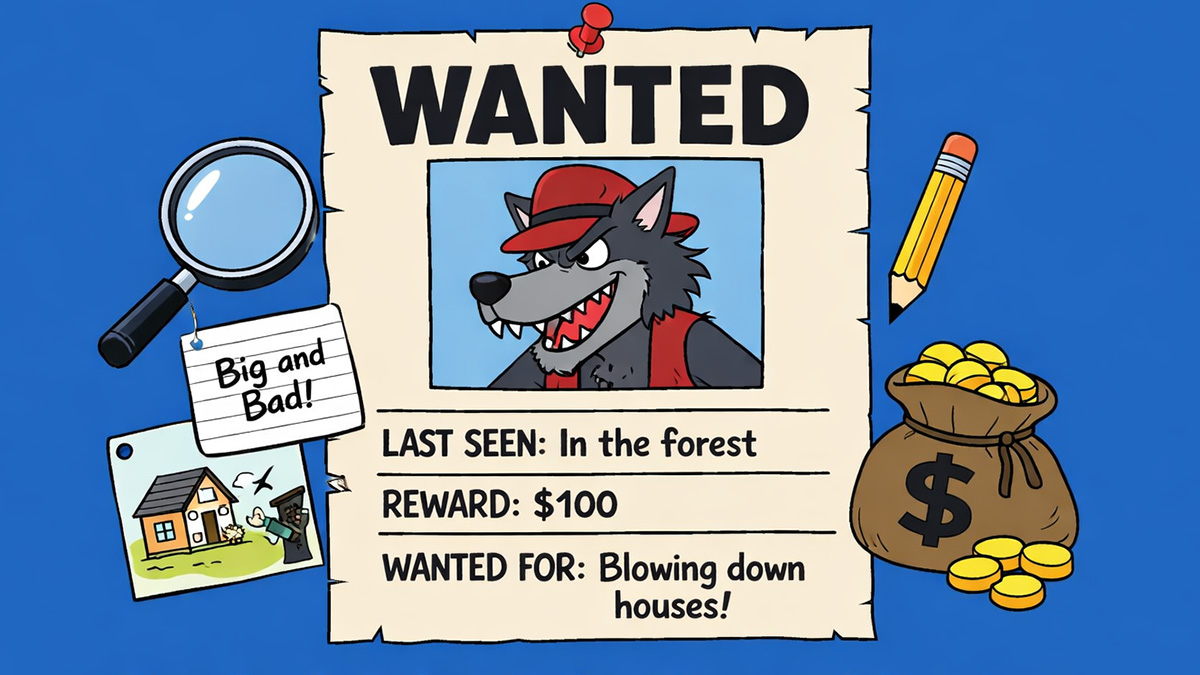
This free fairy tale activities lesson helps Grade 2 students closely read a fairy tale and think like investigators. Students examine a character’s actions, motives, and traits, then create a detailed wanted poster that combines drawing, descriptive writing, and evidence from the story.
Subject Area: English Language Arts
Overview
Students read or listen to a familiar fairy tale and select a character to study carefully. Over several class sessions, they collect evidence from the text, organize notes, and produce a “wanted poster” describing the character’s appearance, behavior, and role in the story. The project strengthens comprehension, inference, and descriptive writing while keeping engagement high through a creative format.
Subject Connections
The lesson centers on English Language Arts as students read literature, infer character traits, and write descriptive text. Art supports communication through illustration and visual layout. Social studies concepts appear lightly as students consider rules, responsibility, and consequences within a community.
Learning Goals
- Identify important actions and traits of a story character
- Use evidence from a text to support ideas
- Write clear descriptive sentences
- Organize information for a purpose and audience
- Combine writing and illustration to communicate meaning
Materials
- A class fairy tale (picture book or short text)
- Chart paper or whiteboard
- Poster paper
- Pencils and erasers
- Colored pencils or markers
- Rulers
- Student writing paper
Preparation
- Select a fairy tale with clear character actions
- Prepare a character evidence chart on chart paper
- Model a simple wanted poster layout
- Photocopy planning sheets if desired
Teaching Procedure
Each session fits a standard class period of 45–50 minutes.
Session 1 – Reading and Character Investigation
- The teacher reads the fairy tale aloud and pauses to ask who causes problems and who helps solve them. Students orally identify characters and record at least two actions the character performs on personal note paper.
- Activity: Character Evidence Hunt. The teacher rereads selected pages and asks students to listen for clues about a character’s behavior and personality. Students listen, point to supporting pictures or sentences, and write or draw three pieces of evidence on their paper showing what the character does or how others react to them.
- The class builds a shared chart listing actions, personality traits, and possible reasons the character might be “wanted.” Students contribute one idea each and copy at least two ideas into their notes.
Session 2 – Planning the Poster
- The teacher models how a wanted poster includes appearance, last known location, and reason for being wanted. Students choose one character and write the character’s name and role on a planning sheet.
- Activity: Description Builder. The teacher demonstrates describing clothing, physical traits, and behavior using simple adjectives. Students write three descriptive sentences about their character and sketch a rough drawing showing recognizable features.
- The teacher guides students in deciding a fair reward amount and the character’s “crime” based on story events. Students write a one-sentence explanation using information from the fairy tale.
Session 3 – Drafting the Wanted Poster
- The teacher distributes poster paper and demonstrates spacing sections with a ruler. Students lightly divide their page into title, picture, and description areas.
- Students write a large “WANTED” heading and carefully copy their descriptive sentences onto the poster in complete sentences.
- Students draw a detailed illustration of the character, including clothing and setting details that match the story.
Session 4 – Revising and Publishing
- The teacher models rereading writing to check spelling and punctuation. Students reread their poster text and correct at least two errors using pencils.
- Students color illustrations and add optional details such as last seen location or reward amount. Each student produces a finished poster ready for display.
- Students present their poster to a partner, explain the character’s actions, and answer one question about their evidence from the story.
Assessment
- Poster includes a recognizable character
- Writing describes appearance and actions
- Reason for being wanted matches story events
- Student explains at least one piece of story evidence
- Writing uses readable sentences and basic conventions
Differentiation
- Provide sentence starters for developing writers
- Allow dictation to an adult or peer helper
- Offer a word bank with character traits
- Challenge advanced students to include dialogue quotes from the story
Grade Adaptation
Grade 2 students read a shared fairy tale and write short descriptive sentences about a character. Grade 1 students would rely more on drawing and oral explanation with the teacher writing their words. Grade 3 students would expand to paragraphs and include multiple pieces of text evidence.
Extension Ideas
- Hold a classroom “trial” where students argue whether the character is guilty
- Compare heroes and villains from two different fairy tales
- Create a class bulletin board gallery of wanted posters
- Write a diary entry from the character’s point of view
Fairy Tale Character Ideas
Use this list to help students pick a character with clear actions, recognizable traits, and story events they can describe on a wanted poster. Encourage students to choose a character whose choices create a problem, break a rule, or cause trouble, because those behaviors make it easier to explain why the character is wanted.
Students should also be able to describe how the character looks, how the character treats others, and what the character is known for in the story.
- Big Bad Wolf chooses tricks and threats to get what he wants, lies to characters, and causes danger. Students can describe sneaky behavior, scary tone, and how others react to him.
- Goldilocks enters without permission, uses other people’s things, and leaves a mess. Students can describe careless choices, ignoring rules, and the consequences that follow.
- The Wicked Stepmother controls others, gives unfair rules, and treats someone badly out of jealousy. Students can describe bossy behavior, harsh decisions, and how the victim is affected.
- The Evil Queen becomes angry when she feels challenged and makes plans to harm someone. Students can describe envy, obsession with being the best, and plotting in secret.
- Jack takes a risky shortcut and makes choices that create trouble for himself and others. Students can describe impulsive decisions, bravery, and the results of taking something that is not his.
- The Giant uses size and power to threaten others or guard something valuable. Students can describe intimidation, loud behavior, and how characters try to avoid him.
- Rumpelstiltskin makes deals with strict rules and demands payment. Students can describe tricky promises, pressure, and how the deal creates a problem.
- The Fox flatters, misleads, or sets traps to get food or gain an advantage. Students can describe sly behavior, smooth talking, and how other characters get fooled.
- The Gingerbread Man refuses to listen, runs away, and keeps teasing others as he escapes. Students can describe defiant choices, bragging, and what happens when he ignores warnings.
- The Troll blocks a bridge or pathway and demands something in return. Students can describe guarding, bullying, and how the troll uses control to stop others.
Teacher note for selection: steer students toward characters with at least three clear story actions they can point to, plus at least two appearance details they can include in a drawing and written description.
