
Bring the Real World into the Classroom as a Teaching Strategy

Using real-world examples and tackling real-world problems in the classroom can make learning more meaningful to students. It can also spark excitement about gaining knowledge on important issues.
Research supports the value of authenticity when teachers use real-world problems and scenarios. Not only does this make lessons more meaningful, it increases engagement and helps students become more aware of the choices they may face in society.
Here are a few teaching strategies to bring the real world into your classroom.
Look to the News
The first place to look is the news. There will always be current events that connect to topics being taught in the classroom.
If you’re learning about the weather and storms such as hurricanes and tornadoes, discuss real events like Hurricane Katrina or severe storms in Oklahoma. If you are studying racism or civil rights, you can examine contemporary events reported in the news.
Reading about real events helps students connect more strongly with what they are learning. It shows that these topics exist beyond textbooks and have real consequences in the world.
Invite Guest Speakers to the Classroom
One of the best ways to connect students to real-world experiences is to invite guest speakers. People working in different professions can provide insight that no textbook can offer.
Teachers are often asked why certain subjects need to be learned. A guest speaker such as an electrician can demonstrate why mathematics matters in real work. A politician can illustrate the importance of persuasive writing and communication.
Guest speakers can also model student success. Meeting someone who has achieved success in a career or field can inspire students and help them imagine their own future paths.
Take a Class Field Trip
Allow students to experience and observe the world around them by taking them outside the classroom. This can include digital experiences such as a virtual field trip using technology in the classroom, where students might explore locations like the White House or a spacecraft.
Physical trips outside the classroom can be even more powerful, allowing students to observe environments directly and connect lessons with real-world settings.
Simulate a Real-Life Experience
If you cannot invite a guest speaker or organize a field trip, you can simulate real-world experiences inside the classroom. This can be a highly effective way for students to understand how events unfold in real life.
For example, if students are reading about an important historical trial, they can simulate the courtroom by taking on roles and acting out the proceedings. Role-playing allows students to see events from multiple perspectives and better understand the people involved.
Give Students a Real, Tangible Problem to Solve
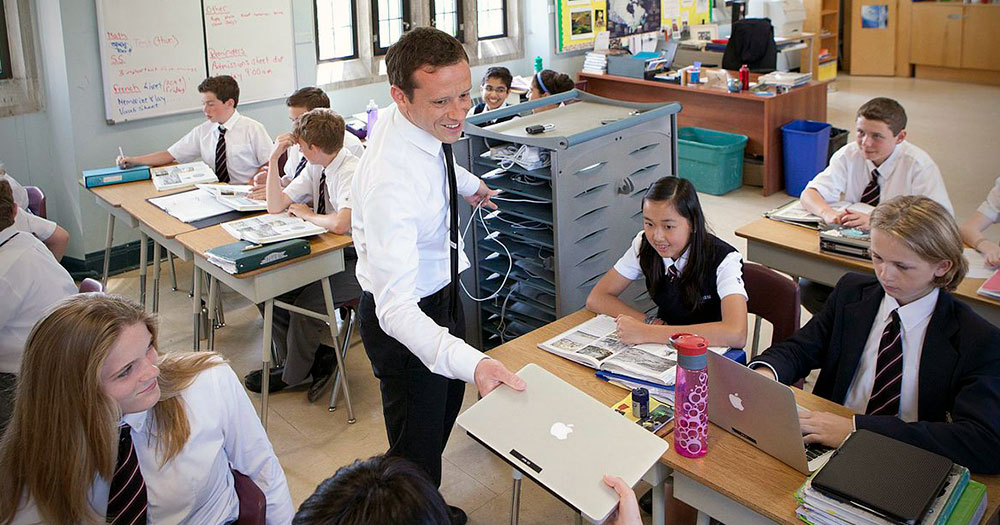
Give students opportunities to apply their knowledge to real problems. One way to do this is by examining issues in the local community such as pollution, transportation, or poverty.
Students can also investigate problems inside their school. They might analyze cafeteria nutrition, examine school transport routes, or propose improvements to homework policies. When students work on issues that affect their daily lives, engagement and motivation increase.
Use AI Tools to Explore Real-World Work
Artificial intelligence is already part of many modern workplaces, so it can also play a role in real-world learning activities. Students can use AI to brainstorm ideas, research topics, or draft project plans in ways that mirror how professionals increasingly work.
However, AI should support learning rather than replace it. As explained in AI in Schools: Pros and Cons, students still need time to develop their own reasoning, writing, and problem-solving skills without technological shortcuts.
Bringing real-world experiences into the classroom creates memorable learning opportunities. Whether through news discussions, guest speakers, simulations, real-world problems, or emerging tools like AI, the goal is to design authentic learning experiences that help students see the relevance of what they study.
How do you bring real-world experiences into your classroom? Feel free to share your ideas in the comments below.
Janelle Cox is an education writer who uses her experience and knowledge to provide creative and original writing in the field of education. She holds a Master of Science in Education from the State University of New York College at Buffalo.

Please can someone give some examples of potential application on the difficulty students face in rural schools in remote areas.
Having guest speakers is a great way to help learners see how the content they are learning becomes useful in the real life. In my language development courses, I invite native speakers of the target language so that students have the opportunity to practice their communication skills with someone who is fluent in that language and does not have the scaffolding skills that teachers do. Students are in a safe environment with someone, the teacher, to help them express their ideas. The project starts with gathering information about the topic on which the speaker is an expert and the preparation of the questions. During the presentation students ask questions and take notes so that they can complete a written or verbal report using the target language. I have found this type of project to engaging and motivating.
I do my best to teach kids how to learn for themselves, not just for a test. I emphasize the fact that the learning process never ends, that they have to continually work on themselves, for themselves. They need to learn how to adapt to the environment they live in, how to upgrade their skills so they stay on top of their job requirements, how to properly communicate etc and school is the perfect place to teach them.
I love your dedication to teaching your students how to learn for themselves in your classroom. Is there any personal advice you have that wasn’t mentioned in the article for this teaching strategy?
great i love it
Very nice and valuable